





I'm on Observation Duty 4
You flip to camera three, notice that a chair is not where it was ten minutes ago and stop dead while you try to remember for sure. That moment sums up I'm on Observation Duty 4. You work a night shift watching a set of security cameras, and your only job is to spot anomalies and report them before too many pile up.
The Night Shift in I'm on Observation Duty 4
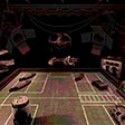
The shift runs from midnight to 6 AM. You cycle through camera feeds of several rooms, each with its own furniture, lights and details. At first nothing seems to happen, and the quiet is part of the tension.
Anomalies start to appear as the night goes on. An object might vanish, move, change or be joined by something that should not be there. When you see one, you open the report menu, choose the room and the type of anomaly and send it.
A correct report fixes the problem. A false report wastes time and can count against you, so guessing is a bad habit to build.
Anomaly Types You Must Learn
- Object disappearance when something is missing from a room.
- Object movement when something has shifted position.
- Extra object when something new has appeared.
- Intruder when a figure is standing where nobody should be.
- Picture and light anomalies when paintings or lamps change.
- Camera malfunction when a feed glitches or goes dark.
Picking the right type matters. Reporting a moved object as a missing one does not count, and the anomaly stays active.
Each type has its own feel once you have seen it a few times. Disappearances leave an empty space that the eye notices quickly, while movements are easier to miss because the object is still in the room.
The hardest are the subtle ones, like a picture that changed slightly. Many players take screenshots in their head of each room at the start of the shift for this reason.
How Difficulty Builds Through the Night
Early hours are calm, with one change at a time. Later hours bring several anomalies at once, often in different rooms. If too many stay active, the shift ends badly.
Intruders are the most frightening type. Seeing a figure standing in a familiar room is a jolt, and some intruders react if you do not report them quickly.
Some players feel the hardest anomalies are too small to notice fairly. Fans of the series consider that part of the challenge and the reason replays are worth it.
Veteran Habits in I'm on Observation Duty 4
Experienced players cycle the cameras in a fixed order and spend the first minutes memorizing every room. That baseline makes changes much easier to spot later in the game.
They also avoid panic reports. Waiting a few seconds to confirm a change prevents false reports and saves time over the night.
If you enjoy this kind of observation, That's Not My Neighbor moves the same idea to a doorman's booth.
What happens if I report the wrong anomaly type?
The report does not fix the anomaly, and it stays active. You need to choose the correct room and type for it to count.
How long is a shift?
A shift lasts from midnight to 6 AM in game time. Surviving until 6 AM without too many active anomalies completes it.
Are intruders dangerous?
Yes. Intruders are the most alarming anomaly type, and leaving them unreported for too long can end your shift.
I'm on Observation Duty 4 turns a quiet camera room into a memory test, and the first time an intruder appears in a room you have watched all night, the 6 AM finish line feels very far away.