
Hide and Seek Games












Hide and Seek Games put you in a building with someone who is looking for you and give you very few ways to fight back. You listen, you wait behind doors and you move only when the footsteps fade. This shelf gathers horror titles where staying out of sight is the main skill, from grandmothers with bats to teachers with rulers.
The Basic Loop of Hiding
Almost every entry follows the same rhythm. You explore a house, a school or a factory to find items, a hunter patrols the same space, and when it notices you, you break line of sight and find a place to wait. Then you go back to the search.
What changes between titles is the hunter. Some react to sound, so dropping an object or stepping on a creaky floor gives you away. Others react to sight, so the danger is an open doorway. A few use both, which forces you to think about every step.
Hide and Seek Games reward patience more than speed. Players who rush usually see the same jumpscare several times before they learn to slow down.
Hunters You Will Meet
- Granny walks the halls of her house and hears every dropped item, as covered in our Granny 3 page.
- Baldi speeds up with every notebook you collect in Baldi's Basics Plus.
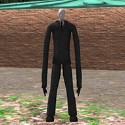
- The Slender Man appears closer each time you look away in Slender: The Eight Pages.
- Krasue chases you through haunted houses while you grab bags of money in Eyes: The Horror Game.
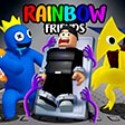
- Toy monsters such as Mr. Hopp stalk children through houses and strange worlds.
Each hunter has a pattern. Learning that pattern is the real progression in Hide and Seek Games, more than any key or upgrade.
Sound as Your Best Tool
Because you rarely see the hunter until it is close, your ears do most of the work. Footsteps on the floor above, a door opening down the hall or a change in the music all tell you where the danger is.
Many Hide and Seek Games also turn your own noise against you. Running is louder than walking, some floors are louder than others and objects can fall when you bump into them. Headphones make a big difference here, and some players treat them as essential.
A good habit is to stop completely every time you hear something new. Two seconds of silence often save a whole run.
Picking a Hiding Spot
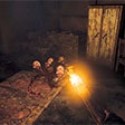
Closets, beds, cupboards and dark corners are the classic choices. Not every spot is equal, though. A hiding place next to a busy hallway is risky, while one at the end of a quiet room gives you time to react.
In some titles the hunter checks hiding spots it has seen you use before. In others you are only safe while you hold your breath or stay perfectly still. Read the rules of each game in this collection before trusting a closet with your life.
The hide scene in Suzy Says! is a good example of the short version: one command, a creature walking through the house and a single rule, which is not to be seen. Our survival tips explain how to get through it.
Solo and Co-op Hiding
Most Hide and Seek Games are single-player, which makes every encounter feel personal. A few support co-op, and that changes the mood completely. In Pacify a team splits up to search a house while one person distracts the hunter, and teammates can lure the danger away from each other.
Co-op versions are louder and funnier, but they also create new problems, like a friend who opens the wrong door at the wrong time. Solo play is better if you want the full fear.
Both styles share the same core: knowledge of the map and calm reactions win more often than luck.
Settings That Shape the Chase
The building matters as much as the hunter. A family house is small, so the hunter is never far away, but you know every room after a few minutes. A school or a supermarket is larger and full of corridors, which gives you room to run but more places to get lost. Night of the Consumers, for example, turns a supermarket into a maze where stacking shelves is your only job and the customers are the problem.
Lighting changes the rules too. Dark Hide and Seek Games make you rely on a flashlight, which helps you see but also shows the hunter where you are. Brighter settings let you plan routes, but they leave fewer shadows to hide in.
Some Hide and Seek Games even change the map between attempts, moving items and opening new paths so that memorizing one route is not enough. These are the hardest entries on the shelf and the most rewarding once you understand them.
How to Get Better
- Learn the map before collecting anything. Knowing exits matters more than knowing item locations.
- Move in short bursts and stop to listen.
- Never hide in the first spot you find; look for one with two ways out.
- Watch how the hunter reacts after a failed search. Many patrol patterns repeat.
- Accept a few failures. Each one teaches you something about the route.
Why Hiding Feels So Tense
In most action games you can fight back, so fear fades once you have a weapon. Hide and Seek Games remove that option. The only power you have is information, and the hunter always seems to have more of it.
That imbalance is what makes Hide and Seek Games memorable. A narrow escape, when the footsteps pass your closet and fade away, feels better than winning a fight.
Every game on this shelf has its own guide page on SuzySaysGame, with the hunter, the map and the main goal explained. Choose a game based on how much tension you want tonight, and keep a light on if you need to.