




Buckshot Roulette
The Dealer in Buckshot Roulette never raises his voice, never explains the rules twice and never looks away from the shotgun on the table. You sign a waiver in a grimy back room, sit down across from him and play a game where each turn means pointing a shotgun at him or at yourself. The shells are shown at the start of each round, then loaded in a hidden order, and the rest is nerve and memory.
| Genre | Psychological horror, turn-based |
|---|---|
| Perspective | First person at a table |
| Opponent | The Dealer |
| Lives | Defibrillator charges |
| Modes | Story and Double or Nothing |
Live Shells, Blanks and Turns in Buckshot Roulette
Each round begins with a quick look at the shells: some live, some blank. They are loaded in a random order, and from then on you only know how many of each are left. On your turn, you aim at the Dealer or at yourself and pull the trigger.
Shooting yourself with a blank keeps your turn, which is the key gamble. Shooting the Dealer is safer, but it passes the turn if the shell is blank. Counting shells as they come out lets you make better guesses as the magazine empties.
Your health is shown as defibrillator charges. Lose them all and you are out, and the stakes rise with each of the three rounds.
Items That Change the Odds
- Magnifying glass shows the shell in the chamber.
- Handsaw cuts the barrel so the next live shot deals double damage.
- Beer racks the shotgun and ejects the current shell.
- Cigarettes restore one charge.
- Handcuffs make the Dealer skip his next turn.
You can only hold a limited number of items, so choosing what to keep matters. Using cigarettes when you are already at full charges, for example, simply wastes them.
Items appear between loads and turn a guessing game into a strategy game. Combining a magnifying glass with a handsaw on a known live shell is one of the most satisfying plays.
The Dealer uses items too, so watching what he takes tells you what he might be planning. Later updates added even more items for experienced players.
The Dealer and the Atmosphere
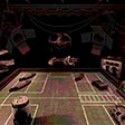
The setting is a dark, noisy room behind a club, lit by a single lamp over the table. Loud music from outside, flickering light and the Dealer's strange face create a mood that feels dangerous from the first second.
The Dealer plays fairly but without mercy. He does not cheat, which makes losing to him feel even worse, because you know every mistake was yours.
Many players say the tension is more stressful than any monster chase. The quiet click of a blank is a relief that never stops feeling good.
Double or Nothing Mode in Buckshot Roulette
After the main story, Double or Nothing mode lets you keep playing for higher rewards. Each win doubles the potential payout, and each round is harder than the last.
This mode is where most players spend their time. Leaderboards and personal records give a reason to come back.
Some players find luck too strong in long runs. Others enjoy learning to manage risk with items and careful shell counting.
Should I shoot myself or the Dealer?
If you are confident the shell is blank, shooting yourself keeps your turn. If it is likely live, aim at the Dealer. Counting the remaining shells is the best guide.
What does the handsaw do?
The handsaw shortens the barrel, so the next live shell deals double damage. Pair it with the magnifying glass for a guaranteed big hit.
How many rounds are there?
The main game has three rounds against the Dealer, each with more shells and more items. Double or Nothing continues beyond that.
Buckshot Roulette turns a single shotgun and a handful of shells into pure suspense, and the long pause before you pull the trigger on yourself is a moment the Dealer seems to enjoy as much as you dread it.